
It will take time and consistent work to learn something new. Learners study very hard for significant examinations. They will sometimes recount information for several hours. But this isn’t likely to facilitate long-term memory. Spaced practice is a better learning pattern. Delays study time over a longer period. This approach allows for repeated learning opportunities in your brain. It also helps one to remember the information later on.
Erasing is a part of learning. Your brain doesn’t store all things forever. Memorization may become a bit more difficult over time. Spaced practice fits into this process. Before information is lost, you see it. The more you do it, the more you remember. This makes the learning process more manageable and useful. It can also help build confidence in future study sessions.
This is the method that many students do without being aware of it. They are recapping notes over a few days. They review challenging concepts before deadlines. This one simple thing can impact their learning outcome. It decreases the need for cramming. It also establishes stronger connections among ideas. Improving memory can help in school, the workplace, and everyday learning environments.
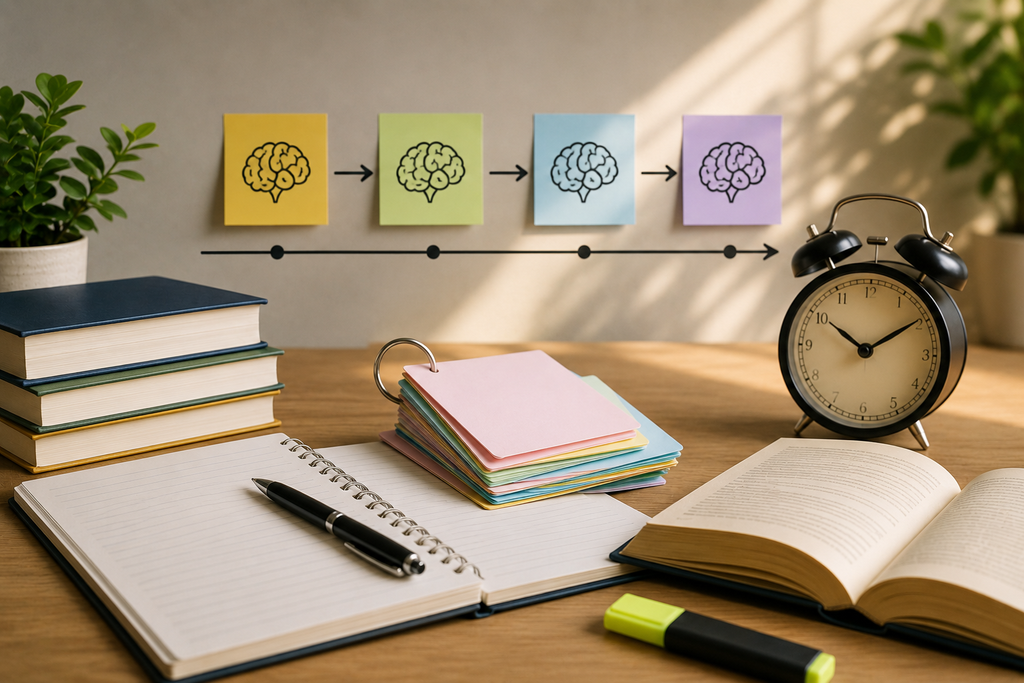
What Is Spaced Practice?
Spaced practice is learning in isolated sessions. They are held throughout various time periods. You don’t have to learn all at once. Rather, you are going back to the information multiple times. There is another opportunity for recall in each session. The gap between sessions is particularly significant. They allow your brain to take a break. This is a process that helps to create better long-term memory.
Spaced practice can be used in a variety of subjects. Use it for vocabulary, formulas, or facts. It is also suitable for complicated topics. Maybe you will learn an initial item today. Then, look it over again after 2 days. A second review could be done later in the week. This leaves behind beneficial learning gaps. This may vary depending on the difficulty.
Why does spaced practice improve memory?
The brain is being called upon to remember lots of information over and over again in spaced practice. You have to use your brain to retrieve it. This process increases memory pathways gradually. Recalls are something that happens every time it works out; it’s just another learning opportunity. Recalling can be good practice, too, if it’s difficult. You pay attention to certain information more than others. This allows future sessions to be more focused.
Regular spacing also helps to decrease passive learning habits. Repeatedly reading the same page is comfortable. But sometimes comfort does not equal good learning. Spaced practice is a way to rehearse information. There will be questions, and you will have to look for them in your memory. This way, the learning becomes more relevant. It can facilitate access to information for a longer duration.
How can students practice spacing?
Students may start with straightforward study plans. Review new material shortly after the first presentation. After that, make larger time periods between reviews. For instance, after 1 day, review the material. After several days, check back in. Continue reviewing it after another week. Modify these spaces if there is difficulty with the information.
You can use flashcards to help with spaced practice. Record one question on each card. Record the answer where you can’t see it. Attempt to come up with answers before looking at them. Divide cards into different review groups. Difficult cards should be played more frequently. You can have easier cards coming later on.
How to make a spaced study plan?
The first step is to decide on one learning goal. Divide that objective down into smaller issues. Use one topic per session. Write the dates when you learned each topic. Schedule future reviews with a larger review period. Be realistic and simple with your schedule. Don’t develop a plan that seems daunting.
Your study schedule should be in line with your study requirements. These may be reviewed more often if they are difficult topics. Fewer reviews are acceptable for easier topics. There is also an option to modify your schedule at a later date. People have various learning rates. There was a need for some information to be repeated through practice. Other information comes into one’s familiarity pretty fast.
How does spaced practice reduce cramming?
Cramming typically focuses learning into brief time periods. This can be a productive method in the beginning. Be able to recall information for future tests. But a lot of that information can disappear in an instant. Spaced practice is the spacing out of learning. This will provide greater opportunities for memory reinforcement.

The spaced schedule also helps to relieve the pressure of studying. No need for huge sessions just before deadlines. Short sessions may be easier to handle. Avoid studying difficult topics at once. This leaves room for other responsibilities. It can also help to make learning less stressful.
What is the optimal duration of spaced practice?
There’s no perfect number of sessions. Both the subject and the learning goal are important. Brief sessions can be very effective. Practice and quality rather than study. Allow yourself sufficient time to practice recall. Stop if your concentration is noticeably lessened.
Start with short review sessions. This can sometimes take 10 or 20 minutes. Longer sessions may be appropriate for larger topics. But routine evaluations are still more significant. Don’t study to the point of total fatigue. Predictably, more practice is more beneficial.
How does technology support spaced practice?
Many learning resources help to plan regular reviews. One way to arrange your study materials is with digital flashcards. Some programs automatically plan future reviews. Planning sessions will go faster this way. You may even readily follow challenging queries. Technology can help with regular practice by simplifying it.
Success, nevertheless, need not rely on technology. Spaced learning can also be supported by a notebook. First, write questions on one side. Keep answers on another page. Mark subjects according to your confidence level. Then you may manually arrange future evaluations. Elegant systems may be rather effective.
Which Errors Ought You Not Commit?
One frequent error is reviewing passively. Going over notes once more does not ensure excellent memory. Instead of just reviewing, try testing yourself. Still another error is writing unachievable schedules. An excessive number of reviews could make it challenging to keep up. Maintain flexibility in your learning schedule.
Refuse to review everything with equal frequency. Challenging content needs more thought. Common knowledge usually calls for fewer reviews. Steer clear of studying just before significant exams as well. Start going over content right away after you learn it. Then keep reviewing at greater intervals. This helps to form better learning patterns.
How does spaced practice support learning?
Spaced repetition helps to improve memory outside of immediate tests. You can recall helpful information for longer. This is important as knowledge develops across many subjects. Later lessons sometimes rely on prior information. Better memory helps new knowledge to be acquired. You spend less time relearning forgotten fundamentals.
This strategy also helps to boost learning confidence. Regular assessment reveals your true development. One may spot weak spots earlier. This gives you time to make changes to them. Recall gets more automatic over time. Learning becomes a continuous process instead of sporadic studying.
Conclusion
One basic learning technique is spaced repetition. It distributes analysis over several times. This offers your brain several chances to retrieve information. Those chances can help to improve long-term memory. The technique also lessens reliance on cramming. It promotes active learning instead of passive reading. It can be applied across several topics.
Begin with one subject and a basic review to fill gaps. Every time you study, check on yourself. Keep track of challenging material and go over it more frequently. Review intervals for simpler content should be stretched. Maintain a consistent, reasonable schedule. Short courses can help one to make significant learning advancements. Regular training helps information remain easily available for a longer period.
FAQs
1. What is spaced practice?
Learning content over and over again is spaced practice. Every study session is separated by a period. These gaps let your brain process knowledge. They can also help with long-term memory.
2. Is spaced practice preferable to cramming?
Yes, spaced practice usually helps to produce learning that is more permanent. Cramming concentrates learning into one session. Spaced practice distributes learning among several sessions.
3. How frequently ought spaced practice to be used?
First, go over material from one day. Check it once more after a few days. Carry on with larger gaps later. Change timing in accordance with your learning difficulty.
4. Can spaced practice improve kids’ performance?
Indeed, pupils can benefit greatly from spaced practice. It covers a lot of classroom disciplines. Students can go over ideas, information, and notes. Information retention can be enhanced by routine reviews.
5. Does spaced practice take a great deal of time?
Spaced practice can use short sessions; no. You need not have very extensive study sessions. Regular evaluations are more significant than time. Short sessions can nevertheless help one to learn effectively.