
Students need more than just intellectual information nowadays. Employers look for self-assurance and useful abilities. Being ready for a job helps you make the most of your future possibilities. Additionally, much corporate performance is achieved through them. Early on, students can hone these abilities. Little things can help one to make long-term progress.
Good grades by themselves cannot ensure job success. Employers also respect problem-solving ability as well as communication skills. They look for practical thinking and teamwork. Students who show initiative are valued by them. One’s career readiness should begin in college. Simple activities help pupils to learn. Every encounter can help them build their professional network.
The appropriate skills can propel careers. Regular practice sharpens professional abilities. Real events provide more learning opportunities. Students ought to look for difficulties beyond the classroom. These difficulties could help to generate useful confidence. Improve Communication Skills. These skills help pupils outside of the classroom.
Improve communication skills
Every job still depends on good communication. Every day, pupils ought to work on speaking clearly. They ought to express concepts clearly. Good communication helps to build professional ties and teamwork. Students might improve their skills via classroom debates. Additionally, speaking events are welcome for them. Regular practice helps to make communication seem more normal.
Good writing abilities also help one advance professionally. Students need to regularly work on reports and emails. They ought to stay clear of difficult language wherever feasible. Good writing demonstrates great professional knowledge. Regularly, kids can read excellent articles. Afterward, they could highlight key ideas. This exercise improves sentence structure and vocabulary.

Develop Digital Skills
Almost every modern office is shaped by technology. Students need to know popular digital tools. Fundamental computer knowledge is still quite helpful. Students ought to study word processing tools. Understanding of spreadsheets can also be helpful. Tools for presentations help one to communicate better at work. Rising employment prospects can come from digital skills.
Students ought to investigate resources connected to jobs. Students of marketing may pick up analytics tools. Designers can work with contemporary design tools. Students majoring in business can pick up spreadsheet formulas. Students ought to know online research techniques as well. Many interesting courses are available on digital learning systems. Regular repetition improves technical confidence.
Build Problem-Solving Abilities
Employers appreciate individuals who address issues. Students need to improve their practical thinking ability. Before looking for answers, they ought to understand the issues. Asking questions can expose crucial information. Students ought to examine many alternative answers. They should give great thought to pros and cons. This technique helps people make better decisions.
Projects help pupils to hone their problem-solving skills. Group tasks offer useful real-life examples. Furthermore, developing analytical thought are case studies. Students can tackle daily difficulties on their own. They ought to learn lessons from ineffective attempts. Errors sometimes present excellent chances for learning. Future problem-solving techniques can be enhanced by reflection.
Strengthen Teamwork Skills
These start to be positive office practices. Most companies seek strong teamwork skills. Students ought to value several points of view and concepts. Before expressing their opinions, they ought to pay attention. Good teamwork calls for flexibility and patience. These characteristics help one to develop better professional connections.
Students should also assume more obligations. They have to meet the deadlines set for assigned projects. Encouragement from coworkers helps the group to do better. Students ought to report issues before deadlines approach. They ought to avoid placing blame on individuals for errors. Cooperation helps one to acquire responsibility and mutual respect.
Gain Practical Experience
Practical experience helps academic knowledge to become stronger. Students ought to look for chances outside of their normal coursework. Internships offer vital experience in the workplace. In addition, volunteer work helps one to acquire valuable knowledge. Part-time employment helps one to learn time management and responsibility. Professional communication techniques can be enhanced by freelancing. Every encounter helps one to improve job readiness.
Students should meticulously record their practical success. They might design portfolios for chosen projects. Portfolios provide proof of real ability. Students ought to share significant project outcomes. They ought to make their precise contributions very evident. Actual instances help resumes and interviews. Professional confidence can also be boosted by experience.
Learn Time Management
Time management enables pupils to manage obligations. Usually, students juggle tasks and lessons. Simultaneously, they can also manage responsibilities. Bad preparation could cause needless tension. Good preparation simplifies regular tasks. Students should develop practical, regular plans. They ought to give significant chores top priority.
Students ought to stay away from postponing significant tasks. Breaking big projects helps one to control work. Short, focused work sessions can help you pay attention. Students ought to include pauses in their plans. Important deadlines can be organized using digital calendars. Careful preparation could help one to do better in school. It also helps pupils get ready for their careers.
Develop Leadership Qualities
Official leadership need not arise from an official position. Daily activities let students exhibit leadership. They may arrange group projects well. They can help classmates with difficult tasks. Taking accountability shows good leadership ability. Above all, leaders need to be honest with their staff. Under adversity, they also have to remain cool-headed.
Students can join societies and clubs without permission. These initiatives offer leadership opportunities naturally. Students may arrange events and activities. They can manage teams while working on group projects. Such events enable one to improve their decision-making ability. They also foster confidence and accountability. Leadership experience would help future job applications.
Improve Critical Thinking
Critical thinking helps children to make good choices. It requires comprehensive data research. Before accepting content, students ought to carefully consider it. They should look at many points of view and sources. Significant choices should rest on reliable data. This approach advances academic and professional success. Critical thought also helps to reduce careless mistakes.
Reading will enable kids to sharpen this talent. They ought to often consider several points of view. Improving analytical ability can come from comparing arguments. Students should separate real data from personal views. They should look for data behind claims. Learning more will come from asking why. These rituals enable one to grow their own analytical ability.
Build Professional Networking Skills
Making connections might present good professional opportunities. Students should start early with professional relationships. They might go to workshops and career fairs. Professional events offer good chances to learn. Students ought to introduce themselves with assurance. During exchanges, they ought to pose significant questions. Effective networking calls for real interest and respect.
Professional networking sites are another tool students can utilize. Their profiles ought to clearly highlight pertinent skills. Useful learning opportunities should be shared by students. They can contact business experts politely. They ought to stay away from sending general messages time and time again. Strong connections grow over time from meaningful exchanges. With consistent effort, networking gets simpler.
Create a Strong Resume
A resume introduces students to employers. It should highlight relevant skills and experiences. Students should keep their resumes simple. Important information should appear near the top. They should use clear section headings. Each experience should show specific contributions. Avoid unnecessary information throughout the resume.
Students should customize resumes for different positions. Job descriptions can reveal important employer requirements. Students should match relevant skills with requirements. They should check spelling before sending applications. Updated resumes create better professional impressions. Students should also maintain different resume versions. Regular updates prevent last-minute application problems.
Conclusion
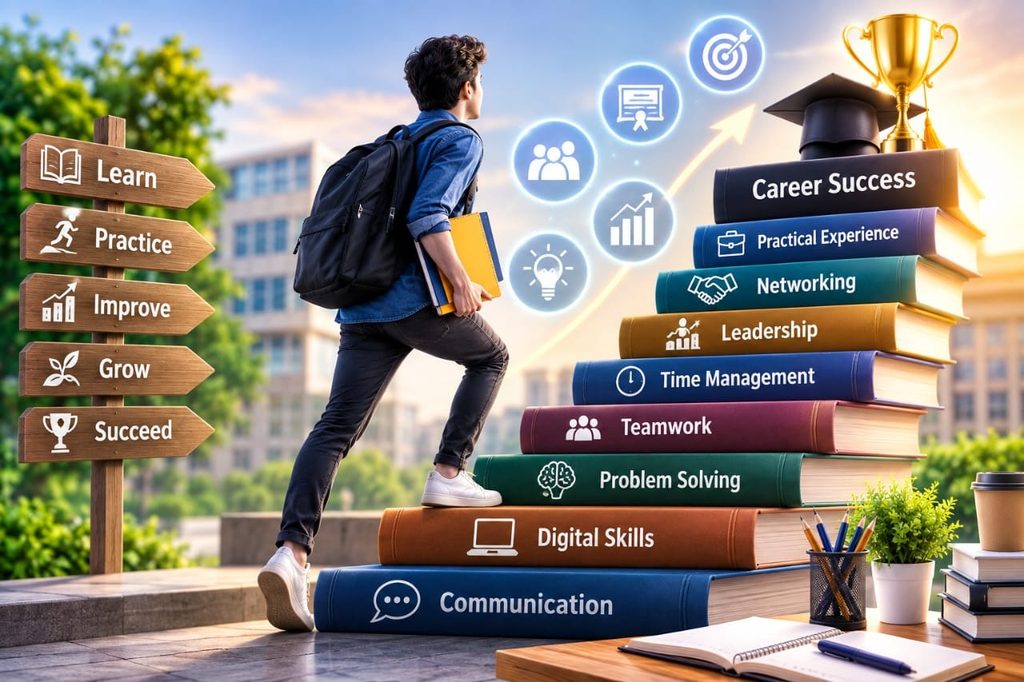
Being ready for a job helps pupils apply their knowledge to actual jobs. Every student still needs to have academic knowledge. Stronger job chances can be developed through practical skills. Better professional relationships and teamwork come from effective communication. Modern employment duties are supported by digital knowledge. Students may manage difficult circumstances with the help of problem-solving. Time management helps one to be more organized personally and increases output. Professional responsibility and confidence result from good leadership. Networking can lead to significant professional contacts. Real experience gives learning more significance.
Gradually, students should acquire these abilities. Regular effort can result in amazing outcomes. A simple career beginning for students. They ought to see their biggest flaws. They ought to select appropriate abilities next. One may encourage ongoing learning with online courses. Projects might offer useful real experience. Internships can help one to grasp the working environment rather noticeably. Portfolios let one show actual professional skills. Resumes ought to obviously underline pertinent abilities. Mock interviews can help a lot to build confidence. Every useful ability will help one in the future.
FAQs
Why are career-ready skills important?
They prepare students for professional workplace demands. They also improve confidence and employment opportunities.
Which skills should students learn first?
Communication and digital skills provide strong foundations. Problem-solving should also receive regular attention.
Can students develop skills without internships?
Yes, internships are helpful but unnecessary. Projects can provide valuable practical learning experiences.
Why should students build portfolios?
Portfolios provide evidence of practical abilities. They also support stronger job applications.
Are online courses useful for students?
Yes, online courses teach valuable practical skills. Students should choose courses matching career goals.
How important is networking for students?
Networking can create valuable professional opportunities. It can also provide useful career guidance.