

Competition can be strong for tiny businesses these days. Large companies have bigger budgets and teams. They are also better-recognized brands. But size is not all that matters. There are a couple of things small businesses have that are unique. They are able to move rapidly and provide customer service. They can also cultivate better rapport with people in the area.
The times have changed, and customers appreciate personal service these days. They want businesses that know what they need. They also value promptness and effective communication. These experiences are better provided by small businesses. They can adapt without the lengthy approval processes. This gives them the chance to compete against some bigger players.
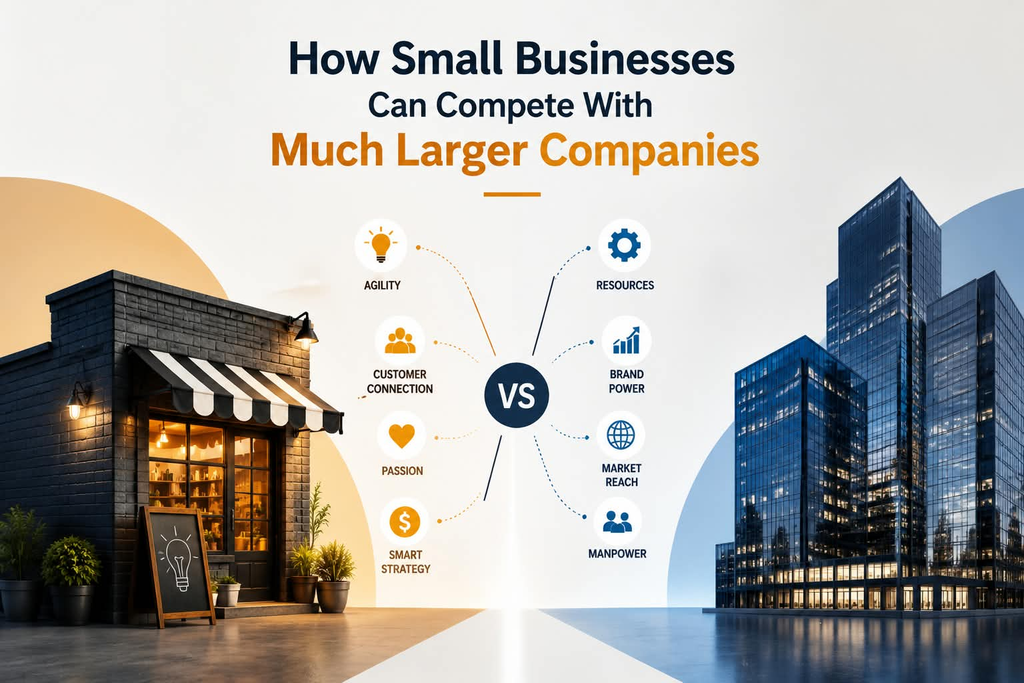
Competing doesn’t mean they should be the same size. Rather, companies ought to take more clever approaches. Improve daily operations with technology. If you work hard, your small business can slowly expand.
Focus On A Specific Niche
Small businesses should NOT serve everyone. A niche solves business positioning. It also has a positive impact on marketing. Customers will know what you offer in no time. This contributes to increased trust in the market. Large companies tend to target wider demographics of customers.
Niche businesses can build up greater market insight. They have a better grasp of individual customer issues. This knowledge helps them produce better products and services. It also enhances content and advertising methods. The customer may prefer to go with a specialist instead of a general provider. Specialization thus can be a great asset.
Provide superior customer service.
Small businesses can be divided in no time by customer service. Customers will recall when businesses treat them well. They like responding promptly and having the communication be helpful. Experiences can be more personal when developed by small teams. They are also better able to react to specific issues.
Support systems are sometimes very complex in large companies. Customers can interact with multiple representatives multiple times. Small enterprises can establish a direct connection with their customers. Owners can deal with significant customer issues on an individual basis. This builds trust and facilitates re-sales.
Develop a solid local footprint.
Local businesses can compete by being connected in the community. Residents are likely to support companies in their community. Residents are likely to patronize businesses in their community. Favorable local relationships can lead to loyal customers. Community activities are available to small businesses. They can also sponsor local groups and functions.
This community presence can be enhanced by local marketing. Companies should fine-tune their local web profiles. They should also gather authentic reviews from customers. Positive reviews can reach out to surrounding customers searching for new businesses. Local visibility can generate consistent organic leads.
Use digital marketing strategically and effectively.
Digital marketing is another way for smaller businesses to gain more exposure. Even without having a large budget, businesses can promote products. Customer relationships and awareness can be created through social media.
The critical factor is selecting the right channels appropriately. No business should be diffused across the board. Pay attention to the platforms of target customers. Develop helpful content and respond to customer questions. It’s more about being consistent than posting frequently.
Language instruction is enhanced by competition.
Content marketing has the capability of providing long-term visibility for your business. Helpful content is used to lure new customers to a business. It can also establish expertise within specific industries. Information on blogs can answer common customer questions. Videos can be used to convey what products are and how they can be useful solutions.
Helpful information should be the priority of small businesses. Promotional material does not have to be the primary material on all channels. Before you make any purchases, you need to build trust with educational content. This can also benefit search engine rankings. Of course, valuable content is beneficial for marketing over time.

Provide customized products and services.
Another benefit of personalization for small businesses is… Standard solutions are typically used by large companies. Compared with larger companies, small companies have more flexibility in their adjustments. They can effectively address the needs of individual customers. This flexibility can lead to significant competitive advantages.
Sometimes, customization can be a reason for a higher price. Consumers will pay more for customized solutions. Personalized service can increase customer satisfaction too. Happy customers are likely to come back. They can also refer companies to other companies.
Develop strong customer relationships
It’s not just about one-off purchases; it’s about building relationships with customers. Communication should take place after transactions have been completed. After-sales communication can be a sign of customer concern. Loyalty schemes can help keep customers coming back. Tailored offers can also help to improve customer relationships.
High customer churn can be prevented through strong relationships. Customers like trustworthy businesses. Sometimes they might be willing to sacrifice a little extra cost. Discounts can be less important than trust. This is how a small business can create added value over the long run.
Make Decisions Faster
Another benefit to small companies is speed. In large companies, there are typically more than one approval step. Smaller teams make decisions much quicker. They are able to test new concepts rapidly.
Small businesses do not have to go through lengthy procedures. They’re able to run limited offers and test demand. Once an idea is successful, it can get further investments. This is flexibility that larger competitors may not be able to offer.
Develop Strategic Partnerships
For small businesses, one way to grow capabilities is through partnerships. Complementary companies can work together with businesses. Such partnerships can lead to joint marketing opportunities. They can also provide access to new audiences.
The value added by partnership should be for both businesses. Select compatible partners who have similar customer segments. Don’t form partnerships that lead to confused experiences. Effective partnerships can boost visibility and credibility. They can also lower some marketing expenses.
Encourage Customer Referrals
Referrals can be powerful growth channels. When it comes to making recommendations, happy customers do just that. The process of making referrals should be simple for small businesses. Customer referral programs are achievable with simple programs. Businesses also can go for reviews in an approachable way.
Your referral customers will come with a level of trust. They have already heard positive feedback from others. This can reduce the buyer decision-making process. Referral marketing can also help cut ad costs. Still, great service is the key to referrals.
Ideal Tool for Competitor Tracking
Competitor research is a way to uncover market opportunities. Pay attention to customer feedback and needs. These openings can be fruitful opportunities to find out something new.
Copying another competitor, however, does not normally provide differentiation. Every business must have a competitive stance. Identify places where customers are not being served well. Come up with solutions to those particular issues. Differentiation makes businesses more memorable.
Keep Improving the Business
In the case of small businesses, improvement is an ongoing process. The needs of customers shift over time. New technology is also a way in which markets change. Feedback can help identify areas for improvement regularly. When it comes to business, companies should check their returns on a regular basis.
This improved service can lead to improved customer retention. Boosting customer acquisition with better marketing. Sustainable competitive strength is gained through consistent improvement.
Conclusion
A small enterprise can take on a bigger business. They just need to develop varying competitive methods. Size shouldn’t be a prohibiting factor. Customer relationships are strengthened with personal service. There are also significant market benefits to specialization.
It’s not about making it against big companies all the time. The objective is to improve yourself, in particular your customers. A loyal customer community can be developed in focused businesses. Within their markets, they can build up good reputations. Small companies can do well with patience and consistency.
FAQs
1. Are tiny companies able to match big corporations?
Small businesses can compete effectively. They ought to concentrate on specialized markets and service. Personalized experiences help to develop more client loyalty.
2. What is the main benefit for a small company?
A great benefit is individualized customer care. Small companies can get to know each client’s wants better. They can also answer client questions fast.
3. What is a way for small businesses to compete on price?
Unnecessary price competition should be avoided by small firms. Rather, they ought to concentrate on general consumer value. Improved service and quality could explain fair pricing.
4. How can technology assist small businesses?
Technology helps to cut down on unnecessary labor and raise efficiency. Automation helps one save significant time and resources. Customer management systems help arrange consumer data.
5. Niche marketing is crucial for small companies because
Niche marketing enables companies to successfully reach particular consumers. It produces better communication and better market positioning. Companies can really learn more about their customers.