

Introduction
An economic cycle tracks variations in economic activity over time. No economy maintains the same level indefinitely. Some years bring high development and growing business activity. Other eras cause less economic expansion and lower consumer demand. These developments influence investors, families, workers, and companies.
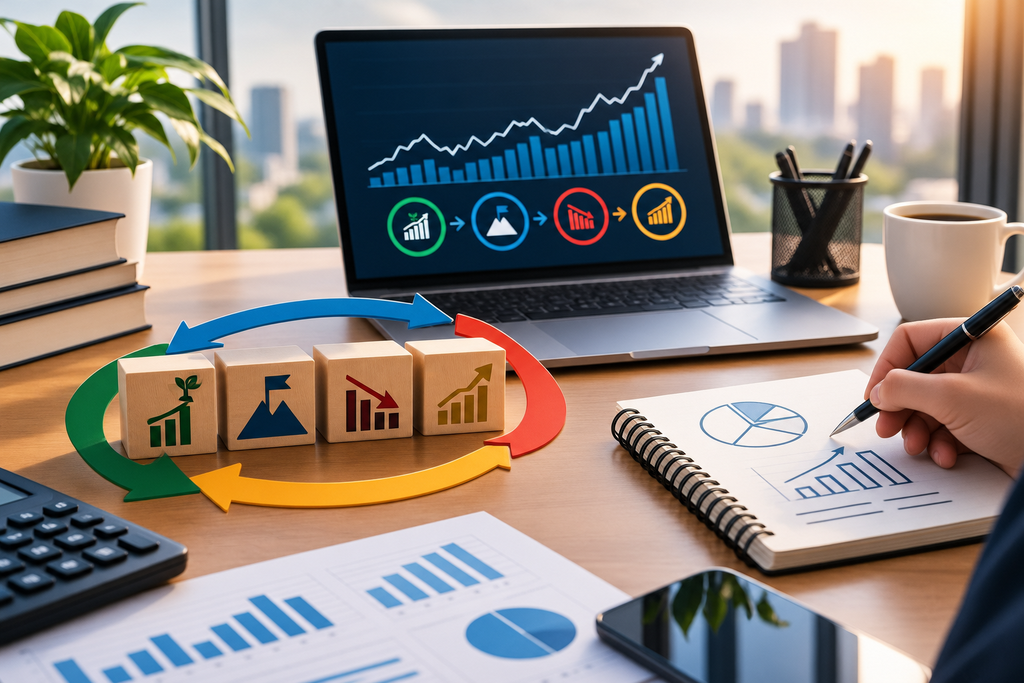
There are four basic phases in the business cycle. These stages are expansion, peak, contraction, and recovery. Every phase makes many financial circumstances possible. Changes could occur in employment, output, income, prices, and spending. Knowing these developments helps one to better track the economy.
Understanding Economic Cycles Clearly
The ups and downs of an economy across several phases reveal an economic cycle. Times of expansion and growth see an increase in economic activity. Usually, businesses generate more goods and services during high demand. More output usually translates into more employment and revenue. Then, a higher salary could help one’s consumer expenditure spread throughout the economy.
Strong expansion may cause economic activity to begin slowing down. Companies might get fewer orders and slow down their newly developing investments. Furthermore, consumers might grow hesitant about their purchases. A recession can result from a sustained and major drop. Later, better demand will enable the economy to start its recovery.
Main Phases Of Economic Cycles
Usually four significant phases define economic cycles. Every stage shows a different degree of economic activity. Demand and production are both rising during expansion. Peak is the highest point before growth begins to slow. While recovery brings rising activity, contraction signals a decrease.
Expansion
Expansion is a time when the economy is getting stronger. Usually, companies have higher service and product demand. Businesses could raise output and take on more employees. This period may also see a rise in consumer income and spending. Robust growth can present more chances in numerous sectors.
Peak
The highest level of economic development is shown by the peak. Business activity and consumer demand could remain quite robust. At this phase, employment can reach great heights. Demand helps to drive up pricing. Economic development could start to drop after the peak.
Contraction
Contraction sets in as general economic activity starts declining. Companies might see less sales and reduced consumer demand. During this phase, investment and production could decline. As businesses manage their costs, hiring might slow. A significant decrease can become a downturn.
Recovery
Recovery sets in when economic activity starts picking up once more. As demand progressively comes back, companies might boost output. Following a poor stretch, consumer confidence could improve. Businesses could start hiring and spending again. Recovery can finally help the economy go toward expansion.
How Expansion Changes Markets
Strong conditions for companies and staff members might result from economic growth. Greater demand drives businesses to boost sales and output. Companies could put money into equipment, technology, and new places. More output translates into more job prospects. Growing employment could help to justify increased household spending.
Financial markets could also react favorably during growth. Investors could anticipate higher corporate profits and future development. Banks might get more loan and commercial credit applications. Companies could feel more confident starting fresh initiatives. But fast growth could also cause inflation pressure.
Signs Of Economic Slowdown
A slowdown implies that economic expansion is slowing down a bit.
Still, the economy can expand at this point. Still, development lags behind that of the last cycle. Companies could observe fewer purchases and lower sales. Furthermore, customers can start being more mindful about their spending.
Before a major economic downturn, a number of signals could show themselves. No one indication will let us know for sure that a recession is on the way. Most of the time economists look at multiple indicators concurrently. Companies also monitor these signs as they plan their future. Early knowledge could assist in lessening the effects of a slowdown.
- Spending by consumers might begin to drop.
- Business investment may decrease.
- Factory output could drop.
- Job creation could decline.
- Retail sales might slow down.
- Consumer confidence could drop.
Recession And Economic Decline
A recession is a bad time when the economy isn’t doing well. Recessions can cause a general decline in spending and production throughout several industries. Companies could see fewer orders and smaller earnings. To manage expenses, some businesses could limit hiring. During this time, workers might find fewer employment opportunities.
Furthermore, dependent households could adjust their financial patterns. Many times, people put off major purchases when the economy seems unstable. Saving money could be more crucial than unnecessary expenditure. Less demand will strain companies more. Government policies could help to sustain families and economic recovery.
Why Economic Cycles Matter
Cycles in the economy matter since they shape daily financial circumstances. Changes in economic activity might affect income and jobs. Besides influencing prices, interest rates, spending, and investment, they could have an impact on these factors. Important decisions are made by companies using cycle data. Better financial planning is also possible with households utilizing it.
Knowing economic cycles helps one to develop better financial awareness. People can accumulate money when the economy is strong. Companies might want to have cash reserves for slower times. Before deciding on investments, investors can assess risks. Understanding economics enables people to adapt to shifting circumstances.
Effects On Jobs And Income
The economic cycle usually influences employment. Companies typically need extra staff members as they grow. Greater output drives demand for more workers. Strong growth can present more employment options for workers. Improved employment can help families’ incomes to be more robust.
During contraction, working circumstances can get worse. Businesses could postpone new hires or cut hiring. To manage costs, some companies could cut their operating hours. Slower pay rises or fewer jobs could be challenges for employees. Reduced income might also help a family spend less.
Economic Cycle Indicators To Watch
Multiple signs help to clarify the state of an economy. These statistics help one to understand economic activity. No one metric can capture the whole economy. Usually, economists evaluate various indicators before concluding. This way, one gets a more general picture of the economy.
- Gross domestic product is a proxy for overall economic production.
- Data on unemployment highlights the state of the labor market.
- Household demand is reflected in consumer spending.
- Inflation measures shifts in overall pricing.
- Business investment reflects company confidence.
- Interest rates influence borrowing and spending behavior.
Managing Money Through Cycles
Every economic cycle gives personal financial planning significance. Strong economic times could mean more chances for work. Such times could be opportunities to increase emergency funds. Eliminating pointless debt could also help financial stability. Good planning helps you to be more supported in trying circumstances.
In times when the economy is slow, good money management is crucial. Families could finish their budgets and cut needless expenses. Flexible scheduling can help lessen financial strain during economic shifts.
- Create emergency savings when income is higher.
- Review monthly costs in case things start to be unpredictable.
- Stay away from pointless debt and excessive borrowing.
- Before significant purchases, run your demands against your wishes.
- Always have some money on hand for unforeseen expenses.
- Review financial objectives as the state of the economy changes.
Common Questions (FAQs)
How does an economic cycle work?
An economic cycle measures variations in economic activity over time. Expansion, top, contraction, and recovery define its principal phases.
What are the four phases of an economic cycle?
Expansion, peak, contraction, and recovery are the four stages. Every stage reflects a varied degree of economic activity.
How does a recession influence people?
A recession could lower household income and employment prospects. Individuals might also start to cut their spending.
Why do companies examine economic cycles?
Businesses examine economic cycles to guide recruiting, output, and investment decisions. This information also enables businesses to get ready for potential hazards.
Can economic cycles be forecast?
Useful hints on the state of the economy can be found in economic indicators. But no one knows the precise timing of the next changes.
Conclusion
An economic cycle describes how economic activity varies over time. Usually, growth leads to increased output, employment, income, and spending. The apex indicates a high point before development begins to slow. Contraction can lead to lower demand, output, and job levels. Recovery promotes a return of economic activity toward more robust growth.
For daily life, knowing economic cycles has real worth. This information will help companies to plan more effectively. Employees can get ready for any changes in the employment landscape. Families may more deliberately control debt, savings, and expenditures. Fundamental economic knowledge helps one to make better choices in shifting markets.