

Starting an internet store has never been more enjoyable than it will be in 2027. Daily more consumers are shopping online, and businesses of all sizes are using digital stores to reach consumers everywhere. Thanks in part to modern technology, anyone with a good idea and an internet connection can launch an online company at no cost.
Perfect Year to Start an Ecommerce Business in 2027
Built-in artificial intelligence solutions found on current e-commerce systems assist in product description generation, customer service enhancement, and automatic product recommendations. These qualities help newcomers to more easily match bigger companies.
Payment gateways nowadays are faster and safer; therefore, consumer confidence during an online purchase is so boosted. Shipping companies have also improved their distribution networks, therefore helping to simplify worldwide sales more than ever. These developments enable novices to run an online company with less cost, so they can reach customers all around.
How an E-commerce Business Runs Before You Begin
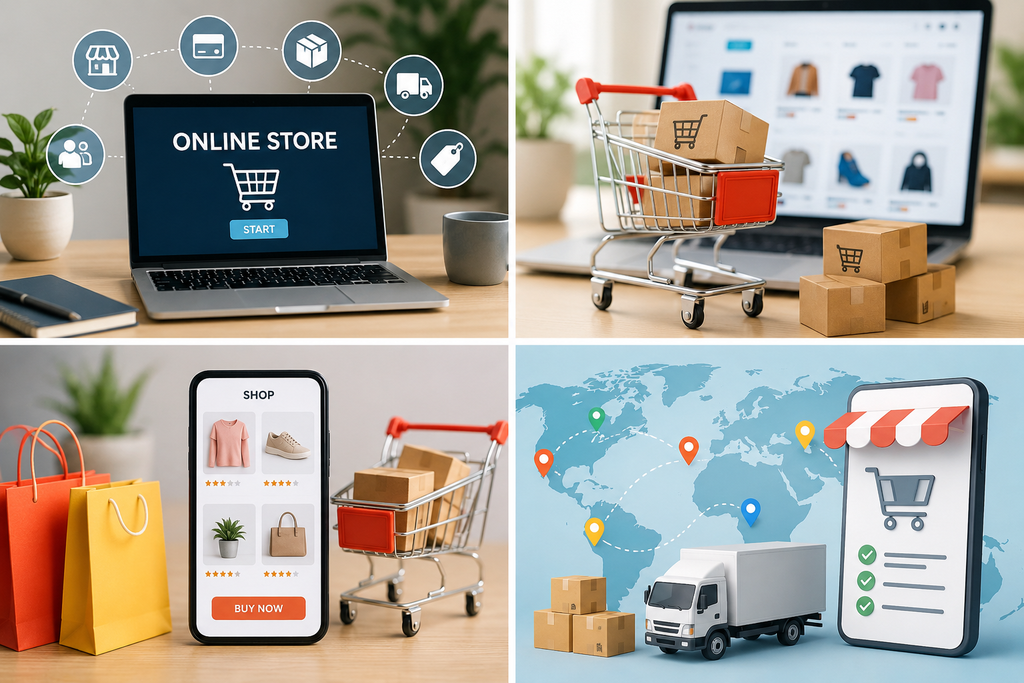
You must understand how an online store runs before you begin building yours. An internet business sells goods or services over the internet instead of from a physical store. On your website, consumers check products, make purchases, securely pay for them, and receive their goods either digitally or physically distributed. Every e-commerce company follows a somewhat similar procedure:
- People discover your company.
- They check your belongings.
- They seek something.
- Payment is handled securely.
- The product is given either physically or electronically.
- Purchases should be necessary; customer service helps to follow purchases.
Choose a profitable e-commerce market that has long-term appeal.
The choice of the appropriate niche will be among the most important decisions you will make. The specific product range your company will offer is niche. Many beginners try to sell everything, but this usually makes it difficult to match bigger markets. Instead, focus on a particular audience and tackle a specific problem. Good e-commerce industries occasionally showcase products related to the following:
- Physical and mental health
- Homeroom Control
- Pet supplies
- Apparatus for exercise
- Cosmetic items
- Items that are kind to the environment
- clever residential techniques
- Accessories for employment
- Things for newborns
- Hobby equipment
Choosing the appropriate products is as important as knowing your customers.
Look at your rivals and investigate your target market. Begin considering questions such as:
- These goods sell themselves.
- What problems are they attempting to address?
- How much money do they have?
- Which sites now do they buy from?
- Which traits grab most of their notice?
Looking at rivals might also reveal intriguing insights. For successful online companies in your sector, check the product pages, pricing rules, shipping options, consumer reviews, and website design. Look for areas you could provide a better experience instead of only duplicating them. This could be better quality material, special product bundles, faster delivery, or enhanced customer service.
Create a basic e-commerce business plan to guide growth.
Many newcomers skip creating a company strategy because they think it’s only for big companies. In fact, any fundamental plan gives your internet business direction. It keeps you focused on your goals and helps you avoid costly chances.
Your corporate plan need not be sophisticated. First, compile a list of the goods you plan to sell together with your intended audience, expected beginning expenses, marketing strategy, and monthly sales goals. You can modify the plan using innovative ideas and updated financial estimates as your business grows.
Register Your Company and Manage Legal Needs
Running a proper e-commerce operation calls for abiding by the laws of your nation. Enrolling your company gets you ready for future development and helps you to establish credibility with clients. You might have to register your company name, get permits, pay taxes, and abide by consumer protection laws depending on where you are. You also want to develop significant corporate pages for your website, which include the following:
- Privacy Guidelines
- Terms and Conditions
- Travel Policy
- Refund and Returns Policy
- Page of Communication
- Quality of goods
- Time taken for shipping
- Client support
- Minimum order quantity
- Constant pricing
- Return policies
- production possibilities
Pick the Best Ecommerce Platform for Your Online Store.
Customers will view your products and make purchases on your e-commerce site. Picking the correct platform greatly simplifies your business administration. While some platforms cater to beginners and include drag-and-drop website tools, others feature sophisticated modification for expanding companies. These qualities help one to weigh different e-commerce platforms:
- Simple website construction
- Design compatible with mobile devices
- Integrated secure payment
- Attributes of SEO
- Inventory control
- Tools of marketing
- Analytics and Reporting
- Integrations of applications
- Customer care
- Scalability
Create SEO-friendly product pages that propel more sales.
Among the most crucial features of your internet store are product pages. They help people find your products and also boost your search engine exposure. Every product page ought to begin with a clear and thorough product title. Naturally include your target keywords without overusing them. Your product sites ought to feature:
- Excellent product photographs
- Numerous perspectives on view
- Where feasible, product videos
- Clear cost
- Specifications for products
- Available hues or sizes
- Review of customers
- common questions
Develop a Clever Pricing Plan to Raise Profit
Your revenues and profitability depend on pricing. Too costly prices will deter customers; too low pricing will lower your margins. First determine all of your company expenses, including:
- Cost of goods
- Shipping fees
- Packaging
- Selling
- Costs associated with the First form
- Fee for payment processing
- Taxes
- Competitive Pricing
- Pricing based on value
- Base your charge on the value clients get instead of only applying a markup.
Combo Pricing
Group related goods into bundles to help to raise the average order value. Help your online store using social media and content marketing. Your first step is opening your store. Highlight the sites your target customers frequent most. Often mixing educational, entertaining, and advertising content. Good recommendations for material include:
- product samples
- shorts behind-the-scenes
- Customer reviews
- Product analysis
- Tutorials
- Suggestions for the sector
- Typical questions
First purchases are great, but motivating repeat business is even more advantageous. Offer savings, free guides, or special deals in exchange of email signups. Good email systems include:
First emails
Ideas for goods
Seasonal discounts
Reminders for cart abandonment
emails expressing thanks
Order amendments
Typical Ecommerce Novice Mistakes to Stay Clear in 2027
Many rookie company owners act in ways that stop their firm from growing. Understanding these common problems can help you avoid needless delays. Among the most often made errors are the following:
- Choosing goods free from sufficient market research.
- Ignoring search engine optimization
- using subpar product photographs.
- Composing pasted product descriptions.
- Creating unachievable expenses.
- Giving inferior service to customers.
- making the checkout process more challenging.
- Ignoring mobile consumers.
- neglecting to check website speed.
- Not following business data.
Develop in 2027 a profitable and successful e-commerce company.
The growth of e-commerce has absolutely nothing to do with luck. It comes from careful planning, constant study, and client priority. These technologies enable you to spend more time growing your company instead of doing paperwork by hand. Every successful e-commerce brand started with one product and one client. Keep dedicated, keep improving your store, and be adaptable as market trends change.
Apply SEO to enable your online store to rank Google
Search engine optimization (SEO) is among the best approaches to obtain free, long-term traffic for your e-commerce store. Unlike paid advertising, SEO helps your website attract already searching consumers like yours. First, check popular keywords among your possible customers. Create unique meta descriptions and title tags to enable every main page to be optimized. These elements help search engines to comprehend your content and inspire users to view your site.
Other important SEO approaches include:
- Design URLs that are SEO-friendly.
- Include alternative text with vivid details for images.
- Mention pertinent internal pages.
- Write useful blog entries often.
Conclusion
Your inventories, earnings, daily operations, and investment will all rely on the right corporate structure you choose. Your e-commerce company depends on your products. This lets you check the quality, packing, and general customer experience. Think about things. Locate trustworthy vendors and run premium goods from the source. Give better value via quality or customer service while pricing your products in line with rivals.
Your company model will determine your starting costs. Although businesses that purchase inventory could need more money, a few hundred dollars will often help a dropshipping or print-on-demand company to start running. Setting budget for website hosting, domain registration, marketing, product sourcing, and company registration.